



How to choose a showerhead? What kind of showerhead should be used for low water pressure
#Industry information ·2025-10-09 15:25:50


Taking a shower is a daily relaxation ritual, but if the wrong showerhead is chosen - the water temperature fluctuates, the water flow is weak and powerless, and the scale is clogged and hard to clean... Instantly bring happiness to zero. As a frequently used hardware component in the bathroom, the selection of a showerhead should take into account four core dimensions: water pressure compatibility, water flow experience, material durability, and cleaning convenience.
I. Water Pressure Adaptation: The "Line of Life and Death" for Low Water Pressure Households
Water pressure is the foundation of a showerhead's performance, but most families have only a superficial understanding of water pressure parameters.
Standard water pressure range: The water pressure in domestic residential buildings is typically 0.3 to 0.5MPa (megapascals). If it is lower than 0.2MPa, ordinary shower heads may experience problems such as weak water flow and top spray interruption. If the pressure exceeds 0.6MPa, a pressure reducing valve should be installed to prevent excessive water flow impact force.
Low water pressure solution
Pressurization technology: For instance, the Hengjie T8 series showerhead integrates Hengjie's high-tech double powerful pressurization, featuring a 0.4mm inverted pyramid-shaped fine water outlet, which provides an excellent pressurization effect. Even in low water pressure conditions, it can still offer a refreshing shower.
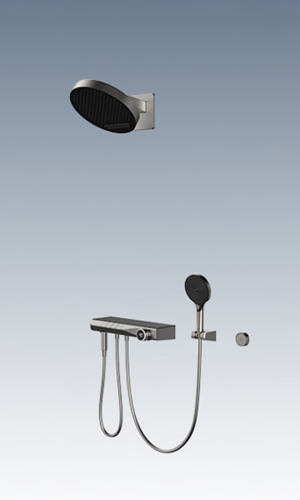
Fine water outlet: For showerheads with a water outlet diameter of no more than 0.3mm (0.5-0.8mm for the standard model), water flow can be concentrated to prevent dispersion.
Avoid the "pressure trap" : Be cautious of low-priced pressure-increasing showerheads that forcibly increase pressure by shrinking the water outlet. Such designs can cause water to flow like a needle and are prone to clogging. Long-term use can damage the pipes.
Ii. Water Outlet Experience: Mode, Temperature and Coverage Area
1. Multi-mode switching: Meeting the needs of the whole family
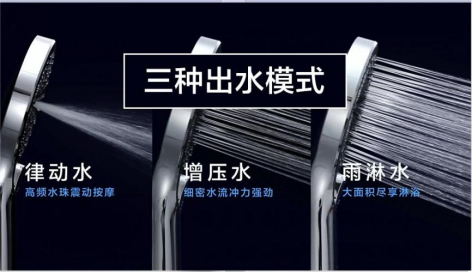
A high-quality showerhead should offer at least three water outlet modes:
Rhythmic Water: High-frequency water droplet vibration massage;
Pressurized water: Fine water flow with strong impact force;
Rain and water: Enjoy the rain over a large area
2. Constant Temperature Technology: Say Goodbye to "Sudden Cold and Hot"
Traditional shower heads rely on manual adjustment of the ratio of hot and cold water, and the water temperature is easily affected by other water usage points (such as flushing the toilet or starting the washing machine). The constant-temperature showerhead is equipped with a thermal sensitive element inside, which can automatically balance the water pressure of cold and hot water, keeping the water temperature fluctuation within ±1℃. When making a purchase, please note:
The constant-temperature valve core needs to be compatible with the local water quality. In areas with hard water, it is recommended to choose a ceramic valve core, which has a stronger ability to resist scale formation.
Iii. Material and Craftsmanship: The key to determining Service life
1. Main material: Fine copper > stainless steel > zinc alloy
59A fine copper: Copper content ≥59%, strong corrosion resistance, high pressure resistance without easy cracking, is the material for high-end shower heads.
304 stainless steel: High cost performance, but it is prone to water stains when in long-term contact with hard water and needs to be wiped frequently.
Zinc alloy: Low price but low density, prone to corrosion by scale, with a service life of only 3 to 5 years. It is not recommended.
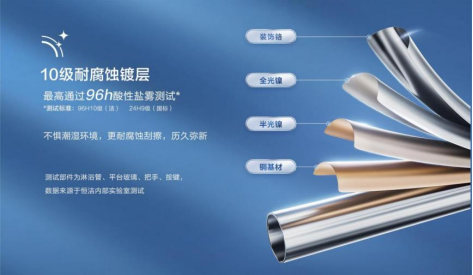
Surface treatment: Grade 10 electroplating > baking varnish > ordinary coating
The more electroplated layers there are, the stronger the corrosion resistance will be. High-quality shower heads need to go through 12 processes including acid washing, polishing, electroplating (nickel layer + chromium layer), salt spray testing, etc., to meet the level 10 electroplating standard (the national standard is level 9), which can ensure that they will not rust for 10 years.
Four. Cleaning Convenience: The "Anti-Clogging Design" That Lazy People Must Read
The water outlet holes of the showerhead are prone to being clogged with scale, especially in areas with hard water. When making a purchase, pay attention to
Silicone gel water release: Gently rub to remove scale, no need to disassemble for cleaning.
Self-cleaning needle plate: Some high-end shower heads are equipped with built-in spring needles, which automatically pop out to clean the water outlet when the water is turned on or off.
Detachable top shower: Large top showers require regular cleaning of the internal waterways. Choosing a detachable showerhead is more worry-free.