


Shift from "price war" to "value war" and "Compliance war"
#Industry information ·2025-12-29 17:26:42


️ New opportunities for Southeast Asian building materials to go global: Shifting from "Price war" to "Value war" and "Compliance war
As 2025 is coming to an end, the building materials market in Southeast Asia is presenting a situation of "two extremes" : on the one hand, infrastructure investment and urbanization have brought about a huge amount of physical demand; On the other hand, increasingly strict access standards set by governments around the world (such as halal certification and environmental traceability) are keeping low-quality and low-price competitors out. For Chinese foreign trade enterprises, 2026 will be a crucial year for "precise overseas expansion".
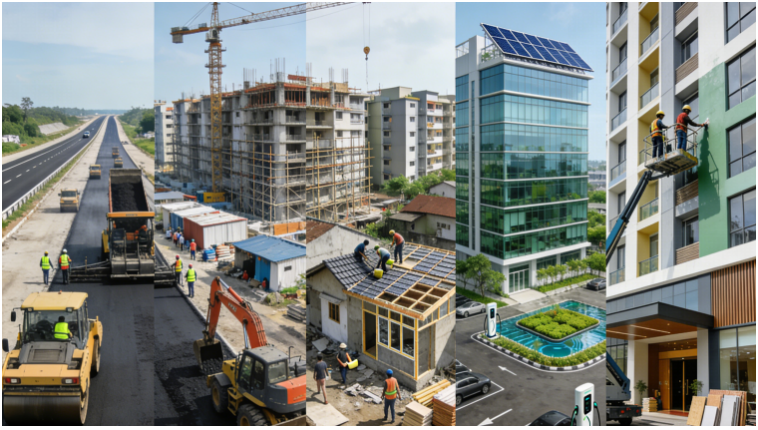
I. Market Overview: A Trillion-yuan Blue Ocean amid the Infrastructure Boom
As one of the regions with the fastest economic growth in the world, the construction market in Southeast Asia is expanding at an average annual rate of 6% to 8%. Under the continuous release of the dividends of the RCEP (Regional Comprehensive Economic Partnership), China National Building Materials, leveraging its complete industrial chain advantages, is deeply involved in the "city-building movement" in Southeast Asia.
The current market presents a demand pattern of "one superpower and many strong players" :
Vietnam: Explosive growth in infrastructure "volume".
Indonesia: The explosion of "special needs" for people's livelihood and religion.
Philippines/Thailand: The explosion of post-disaster reconstruction and stock renovation.
Malaysia: The Explosion of Green and high-end ";quality".
Ii. The "Battle Map" of Five Countries' Markets
To break through in the Southeast Asian market, it is necessary to abandon the mindset of "one trick for all". The following is a deep strategic analysis for five core countries:
Vietnam: The "durability" pursuit of the Infrastructure maniac
The current market situation: The Vietnamese government has raised its GDP growth target, with infrastructure investment increasing by 18% annually. The demand for PVC pipes, steel and industrial floor materials has soared.
Core pain point: As the cost of local labor in Vietnam rises (with an average annual increase of 8% to 10%), buyers no longer only focus on price but attach great importance to construction efficiency and durability.
Guide to Avoiding Pitfalls: Vietnam is currently implementing new regulations under the Product Quality Law, requiring mandatory traceability for high-risk products (such as building materials). Products must be equipped with both physical labels and electronic labels, and a full life cycle traceability system should be established. Products without traceability labels will not be included in the official construction site procurement list.
Indonesia: Halal Certification is a "hard currency";
The current market situation: The construction of affordable housing and mosques in Jakarta and its surrounding areas is in full swing.
Core pain point: Indonesia has a huge halal market (with a scale of over 200 billion US dollars). For building materials that come into direct contact, such as tiles, sanitary ware, and coatings, Halal (Halal) certification is gradually becoming a necessity rather than just an added bonus.
New trend: Capacity cooperation. Simple trade in goods is transforming into "technology export". For instance, recently, Conch New Materials has launched a door and window project in Jakarta, which indicates that "Chinese standards + local production"; is the advanced form for deepening the Indonesian market in the future.
The Philippines: "Safety Essentials" for Earthquake Resistance and Typhoon Resistance
Market status quo: The Philippines is located in the Pacific Ring of Fire and is frequently hit by typhoons.
The core pain point: Earthquake-resistant steel and lightweight partition boards are bestsellers. The government has mandatory seismic standards for new residential buildings and provides subsidies.
Opportunity point: Large commercial complexes and high-end residences in the Manila area have shown a strong interest in insulation materials that can reduce air conditioning energy consumption.
Malaysia: "Policy Dividends"; for Green Building Materials
Current market situation: The government is vigorously promoting the "Green Building Index" (GBI).
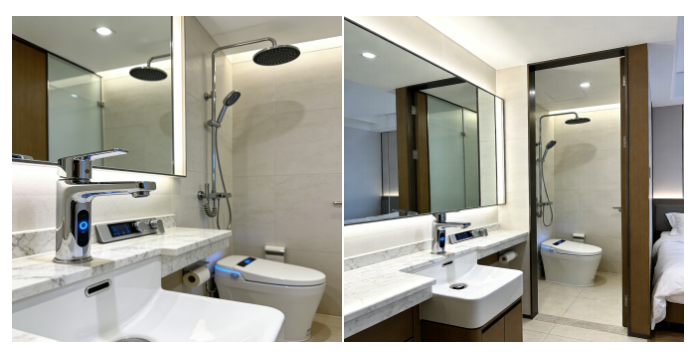
Core pain point: For high-end office buildings and luxury housing projects in Kuala Lumpur, non-green building materials are not used. Low-carbon cement, energy-saving glass and smart bathroom fixtures have huge profit margins here.
Climate adaptation: Malaysia has strong ultraviolet rays and frequent rainfall. Anti-ultraviolet doors and Windows as well as moisture-proof tiles are long-term essential needs.
Thailand: "Quality Upgrade"; in the Existing Market
Current market situation: The recovery of the tourism industry has driven hotel renovations, but the real estate sector is in an adjustment period.
Strategy: The focus is not on ";building new houses", but on "repairing old ones". Waterproof and leak-proof materials, anti-corrosion wood for villa renovations, and smart bathroom accessories for hotels are the main opportunities.